
The Short Answer
Getting your garage door ready for winter in Broken Arrow means checking the weatherstripping, lubricating the moving parts, testing the balance and auto-reverse safety features, and making sure you have a plan for keeping the door operable if an ice storm knocks out power. Do this now, before the first hard freeze, and you avoid the worst of it: a door that won't budge on the coldest morning of the year.
Our winters here aren't brutal compared to the rest of the country, but they're unpredictable. A mild stretch can flip into an ice event with little warning, and the wind that rolls through ahead of a cold front will find every gap in your garage door seal. The goal isn't to over-prepare for a Minnesota winter, it's to handle what actually shows up here: wind-driven dust and cold air infiltration, the occasional ice storm, and hardware that's been baking all summer and is now contracting in the cold.
Start With What Summer Left Behind
Long, hot summers are hard on garage door hardware in ways that aren't obvious until temperatures drop. Metal tracks and springs expand in the heat, and all that repeated expansion and contraction loosens bolts, stretches cables slightly, and dries out factory lubricant faster than people expect. If your door has gone through a summer of 100-degree days followed by sudden storms, it's already under more stress than a door in a milder climate.
Before you do anything else, walk around the door and look for:
- Rust spots or pitting on the tracks and hinges, especially if there was hail or heavy rain damage left unaddressed
- Dents or bowing in the panels from wind-blown debris during storm season
- Loose mounting brackets where the track meets the frame
- Cracked or brittle weatherstripping along the bottom and sides
Any of these left unresolved will get worse once cold weather tightens up the metal and makes brittle rubber even more likely to crack.
Seal Out the Wind and Dust
Wind and dust are a bigger issue here than snow most winters. A worn bottom seal doesn't just let in cold air, it lets in dust and debris that settle on your garage floor and work their way into stored items, vehicle undercarriages, and HVAC equipment if your garage connects to the house.
- Replace the bottom astragal seal if it's cracked, flattened, or no longer makes full contact with the floor along its length. This is a straightforward swap and one of the highest-value things you can do before winter.
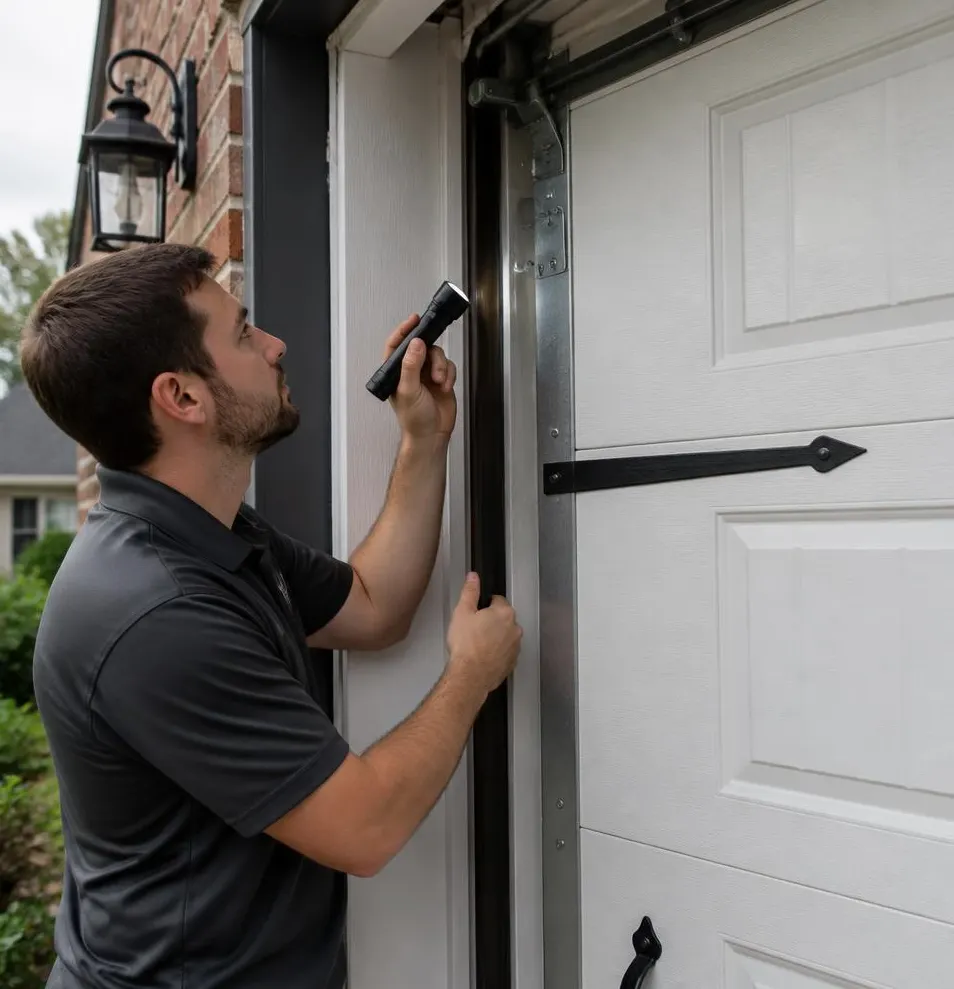
- Check the side and top weatherstripping (the stop molding) for gaps. Hold a flashlight against the inside at night and have someone check from outside for light leaking through.
- Consider a threshold seal on the garage floor itself if wind-driven rain or dust has been an ongoing problem, especially on doors that face the prevailing wind direction.
Lubricate Before the Cold Sets In
Grease and lubricant thicken in cold temperatures, which means a door that was sluggish in December was often under-lubricated going into it. Do this while it's still mild out:
- Wipe down the tracks to remove summer dust buildup — do not grease the tracks themselves, that attracts more grit.
- Apply a silicone-based or lithium-based garage door lubricant to the hinges, rollers, and the springs.
- Lubricate the lock mechanism and the opener's chain or screw drive if accessible.
- Avoid WD-40 as a long-term lubricant here; it's a cleaner and short-term penetrant, not a lasting lubricant for door hardware.
Test the Balance and Auto-Reverse
A door that's out of balance works harder in cold weather, which puts extra strain on an opener motor and on springs that are already more brittle in low temperatures. Disconnect the opener, lift the door halfway by hand, and let go. It should stay roughly in place. If it drops or shoots up, the springs need adjustment or replacement, and that's not a DIY fix given the tension involved.
Also test the auto-reverse safety sensors by placing a piece of wood on the ground where the door closes. The door should reverse immediately on contact. Cold weather can affect sensor alignment if brackets have shifted, so this is worth checking every fall regardless of how the door has been performing.
Plan for Power Outages
If an ice event does roll through and takes out power, you want a way to get the garage door open without the motor. Know where your manual release cord is and make sure it still functions smoothly, a stiff or stuck release defeats the purpose. If you rely on the garage as a main entry point, a battery backup system for your opener is worth the investment so you're not stuck pulling a release cord in freezing rain.
When to Call Broken Arrow Garage Door Co
If your balance test fails, if you hear new grinding or popping sounds after lubricating, or if your opener is struggling and you're not sure whether it's a sensor issue or a backup power issue, that's when to bring in a professional rather than keep troubleshooting. Our Garage Door Maintenance service covers a full inspection of springs, cables, rollers, and weatherstripping, and catches small problems before they turn into a no-start morning in January. If testing reveals worn springs or an opener that's not holding up, our Spring Replacement and Garage Door Opener Service get you back to a door that opens the same way every time, regardless of what the temperature is doing outside.
If you're in Broken Arrow, Tulsa, Bixby, Owasso, Jenks, Coweta, Catoosa, or Wagoner and want your garage door checked out before winter settles in, call Broken Arrow Garage Door Co today to get on the schedule.