
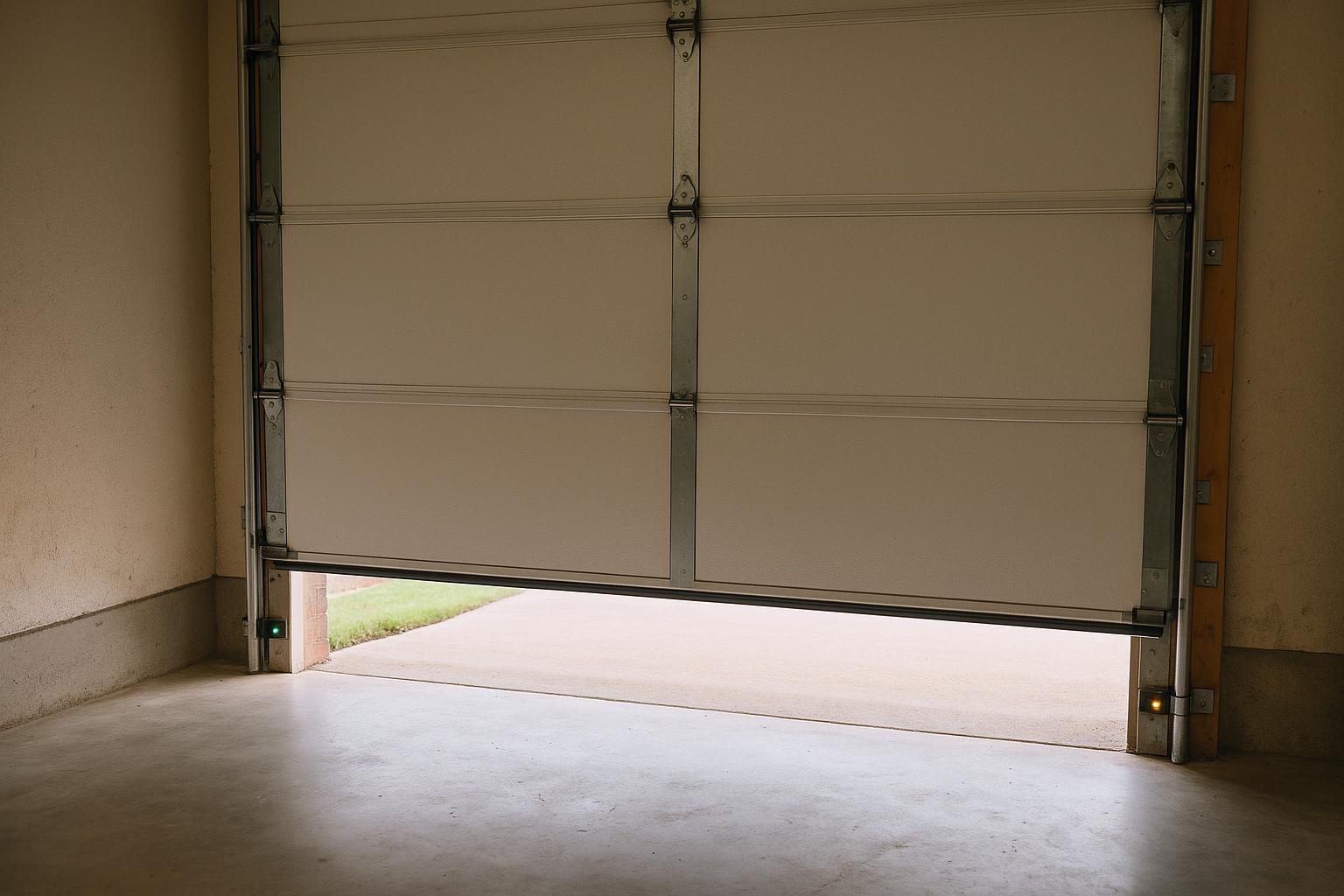
That Frustrating Reverse: What's Going On?
You press the button on your garage door remote, the door starts its descent, and then—right before it touches the ground—it stops and goes right back up. You try again. Same thing. Maybe you try holding the wall button down, and it finally closes, but the moment you let go, it reverses again.
This is one of the most common garage door complaints we hear from homeowners in Broken Arrow, and it's more than just an annoyance. A door that won't stay closed is a security risk, an energy waste, and a sign that something in your system needs attention. The good news is that the cause is usually identifiable and fixable. Let's walk through the most likely reasons your garage door reverses before hitting the floor and what you can do about each one.
1. Misaligned or Dirty Safety Sensors
This is the number one cause of a garage door that reverses unexpectedly. Every garage door opener manufactured after 1993 is required to have photo-eye safety sensors mounted near the bottom of the door tracks on each side. These sensors send an invisible beam across the opening. If something breaks that beam—a person, a pet, a trash can—the door reverses to prevent injury or damage.
The problem is that these sensors can be knocked out of alignment easily. A bump from a bicycle, a lawn mower vibration, or even temperature changes can shift them just enough to break the beam. Dirt, cobwebs, and moisture on the sensor lenses can also interfere with the signal.
What to Try
- Check that both sensors have a steady light (usually green on one and amber on the other). A blinking light typically means misalignment.
- Wipe the sensor lenses gently with a soft cloth.
- Make sure nothing is blocking the path between the two sensors.
- Check that the sensors are firmly mounted and pointing directly at each other.
If you've cleaned and adjusted the sensors and the door still reverses, the wiring between the sensors and the opener may be damaged, or the sensors themselves may need replacement.
2. Incorrect Close-Limit Settings
Your garage door opener has limit settings that tell it how far the door should travel before it's considered fully open or fully closed. If the close-limit setting is off, the opener may think the door has hit an obstruction when it's actually just reaching the floor. The opener interprets this as resistance and reverses the door as a safety precaution.
What to Try
- Consult your opener's manual for instructions on adjusting the close-limit switch. On most models, this involves turning a small screw on the back or side of the opener unit.
- Make small adjustments—usually a quarter turn at a time—and test the door after each change.
- If you're unsure about the adjustment or don't have the manual, this is a quick fix for a professional technician.
3. Worn or Broken Springs
Garage door springs bear the weight of the door and make it possible for the opener to lift and lower it smoothly. When springs wear out or lose tension, the door becomes heavier than the opener expects. During closing, the opener may sense excessive force and reverse the door to protect against what it perceives as an obstruction.
Spring issues are especially common in Broken Arrow homes where garage doors face temperature swings between our hot summers and cold winters. Metal fatigue from repeated expansion and contraction shortens spring life over time.
Important: Garage door springs are under extreme tension and can cause serious injury if handled improperly. Spring replacement should always be performed by a trained technician. This is not a DIY repair.
4. Track Problems
Bent, misaligned, or obstructed tracks can cause the door to bind or stick as it moves. When the opener encounters this resistance during closing, it may reverse the door. Inspect your tracks visually for any obvious bends, gaps between the track and the rollers, or debris caught in the track.
Signs of Track Issues
- The door appears crooked or uneven as it moves
- You hear scraping or grinding noises
- The door hesitates or jerks at certain points during travel
- Visible gaps between the rollers and the track
Minor debris can be cleared carefully, but bent tracks or alignment issues require professional tools and expertise to correct without causing further damage.
5. Worn Rollers or Hinges
Over time, the rollers that guide your door along the tracks can wear down, crack, or seize up. Worn hinges can also create friction and binding. This added resistance during closing can trigger the opener's auto-reverse feature. If your door sounds louder than it used to or moves roughly instead of gliding smoothly, worn hardware is a likely culprit.
Replacing rollers—especially upgrading from plastic to nylon rollers—can dramatically reduce noise and improve door performance. This is a relatively affordable maintenance item that makes a big difference.
6. Opener Force Settings
In addition to limit settings, most garage door openers have force settings that control how much resistance the motor will push through before reversing. If the downward force setting is too low, the opener may reverse even under normal operating conditions.
Like limit adjustments, force settings are typically controlled by small screws or dials on the opener unit. Increase the down-force setting slightly and test the door. Be careful not to set it too high, as this can override the safety reverse feature and create a hazard.
When to Call a Professional
Some of these fixes—cleaning sensors, clearing track debris, or making small limit adjustments—are reasonable for a handy homeowner to attempt. But several of these issues involve components under high tension or electrical wiring that can be dangerous without proper training.
Call a professional if:
- You suspect a spring issue of any kind
- The tracks are visibly bent or the door is off-track
- You've tried basic troubleshooting and the door still reverses
- The opener is making unusual sounds like grinding or clicking
- You're not comfortable working with the opener's settings
At Broken Arrow Garage Door Co, we diagnose reversing issues quickly because we see them regularly. Most of the time, we can resolve the problem in a single visit. We serve homeowners throughout Broken Arrow, Tulsa, Bixby, Owasso, Jenks, and Coweta, and we show up when we say we will.
Don't Ignore a Reversing Door
A garage door that won't close properly isn't just inconvenient—it leaves your home vulnerable. Your garage is often the largest entry point into your house, and an open door invites weather damage, pests, and security concerns. If your door has been reversing and you've been manually forcing it closed or disconnecting the opener to close it by hand, it's time to get it looked at properly.
The fix is usually simpler and more affordable than people expect. Whether it's a sensor adjustment, a limit setting tweak, or a spring replacement, getting your door back to reliable operation protects your home and gives you one less thing to worry about.