
Short answer first
The emergency release cord disconnects your garage door from the opener so you can lift it by hand. Pull it only when the door is fully closed, or when it's open and properly supported and you're prepared to lower it by hand. Pulling it while the door is halfway up, or while you're assuming the springs will hold it, is how people end up with a door on the ground and a car stuck inside overnight.
What the cord actually does
Inside the opener's rail, a metal trolley connects to the drive chain or belt and pulls the door up and down. The red cord is attached to a lever on that trolley. Pull it, and the trolley releases from the drive mechanism — the opener motor is now disconnected, and the door is free to move on its springs and tracks alone, just like it would with no opener installed at all.
That's the whole point of the feature: if the power goes out, or the opener fails, you can still get the door open by hand. It's a safety and convenience feature, not a toy, and it's not meant to be used casually just to quiet a noisy motor or skip a diagnostic step.
What goes wrong, and how badly
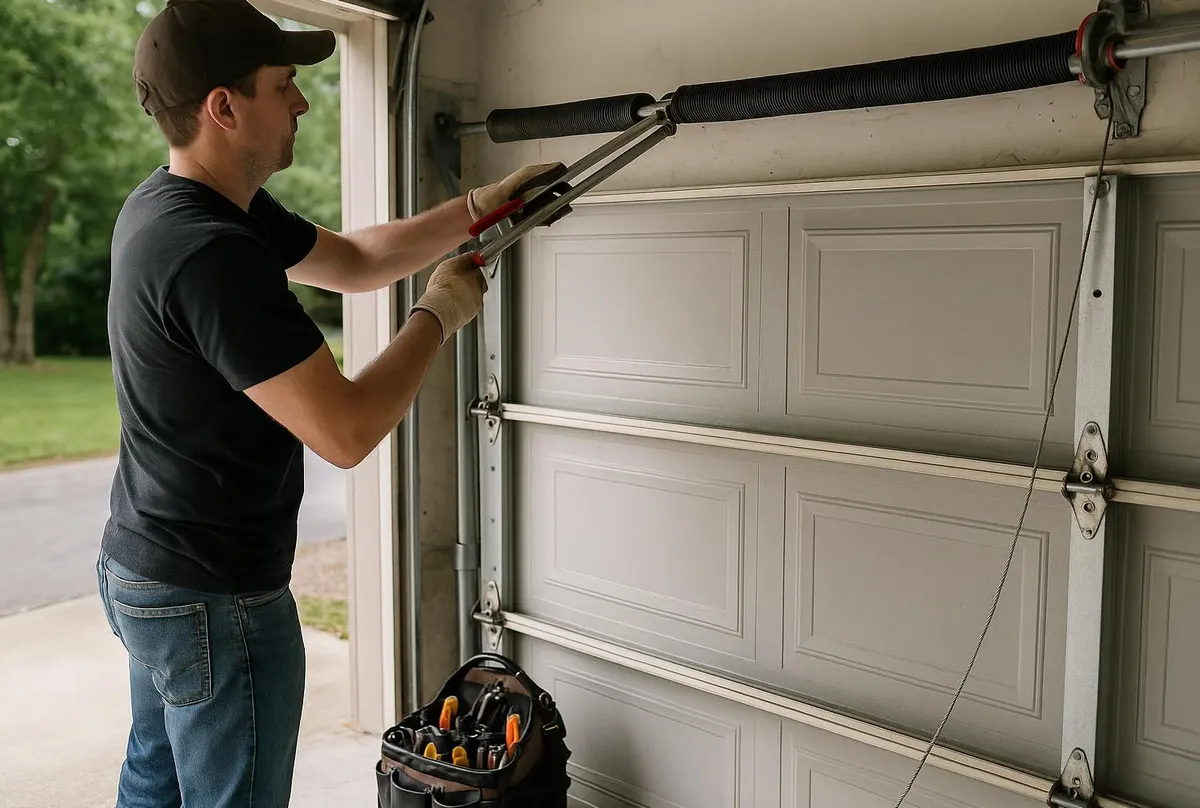
Once the trolley is released, the door's position is held up by spring tension alone — not by the opener, not by anything else. If those springs are weak, broken, or unevenly worn (which happens gradually with age and use), the door has nothing holding it up.
- Door in the up position: Pull the cord with weak or broken springs and the door can drop suddenly, sometimes slamming to the floor hard enough to bend tracks, crack panels, or injure anyone standing under it.
- Door in the down position: This is the safe scenario — the door has nowhere to fall, so this is when the cord is meant to be used.
- Door halfway: The riskiest moment. A partially open door with failing springs can come down fast and without warning, and a car halfway out of the garage has nowhere to go.
A standard sectional garage door weighs anywhere from 130 to over 400 pounds depending on material and size. That's not a weight you want falling freely, and it's not a repair you want to improvise under time pressure.
Why this matters more here
Broken Arrow sees its share of fast-moving storms and wind gusts strong enough to knock out power with little warning. When the lights go out and a car is in the garage, the instinct is to pull the cord and get the vehicle out before the storm gets worse. That's a reasonable move — but only if you take ten seconds first to notice whether the door is fully down, fully up, or somewhere in between, and whether it's been lifting and closing normally in the weeks before. Oklahoma heat also plays a role: temperature swings affect spring tension over time, so a door that felt balanced in spring can feel noticeably heavier or looser by the time the first fall storms roll through.
Actions that actually prevent problems
- Do a monthly balance check. With the opener still connected, disconnect it briefly and lift the door halfway by hand. It should stay put. If it drifts up or drops down on its own, the springs are off balance — that's a repair to schedule, not a problem to work around with the release cord.
- Only release the door when it's closed, if possible. This avoids any fall risk entirely. If you must release it while open, keep hands and anyone else clear of the door's path before you pull.
- Reconnect correctly. To reset, pull the cord toward the door to re-engage the trolley, then run the opener through a full cycle to confirm it's grabbing hold properly. If the opener runs but the door doesn't move, the trolley hasn't reconnected.
- Don't use the cord as a shortcut. If the door is noisy, sticking, or reversing oddly, releasing the opener doesn't fix any of that — it just removes the one thing keeping the door under powered control.
- Know where your cord is and test it once a year. A cord that's been forgotten about for years can be stiff, tangled, or disconnected from the lever entirely — not something you want to discover during a power outage.
When to call us
If your door drops fast after you release it, feels heavier than it used to, or won't stay in place when lifted by hand, that's a spring problem, and it's not one to keep testing with the manual release. Our Spring Replacement service resets the door's balance so the opener and the manual release both work the way they're supposed to. If the opener runs but the trolley won't grab or reconnect, that's usually a job for our Garage Door Opener Service rather than something to force by hand.
If you're in Broken Arrow, Tulsa, Bixby, Owasso, Jenks, Coweta, Catoosa, or Wagoner and your garage door isn't behaving the way it should after using the emergency release, give Broken Arrow Garage Door Co a call. We'll check the springs, the balance, and the opener connection, and get it back to working the way it's supposed to before it becomes a bigger problem.