
Why Cold Weather and Garage Doors Don't Always Get Along
You're running late on a freezing January morning in Broken Arrow. You hit the button on your garage door opener, hear the motor strain, and… nothing. The door won't budge. Or maybe it opens halfway and stops. Few things are more frustrating than a garage door that refuses to cooperate when the temperature drops.
While Oklahoma doesn't see the extreme winters of northern states, we get our fair share of freezing mornings, ice storms, and cold snaps that can wreak havoc on your garage door system. Understanding why cold weather causes these problems — and what you can do about them — can save you time, money, and a whole lot of stress.
Common Reasons Your Garage Door Gets Stuck in the Cold
1. The Weatherstripping Is Frozen to the Ground
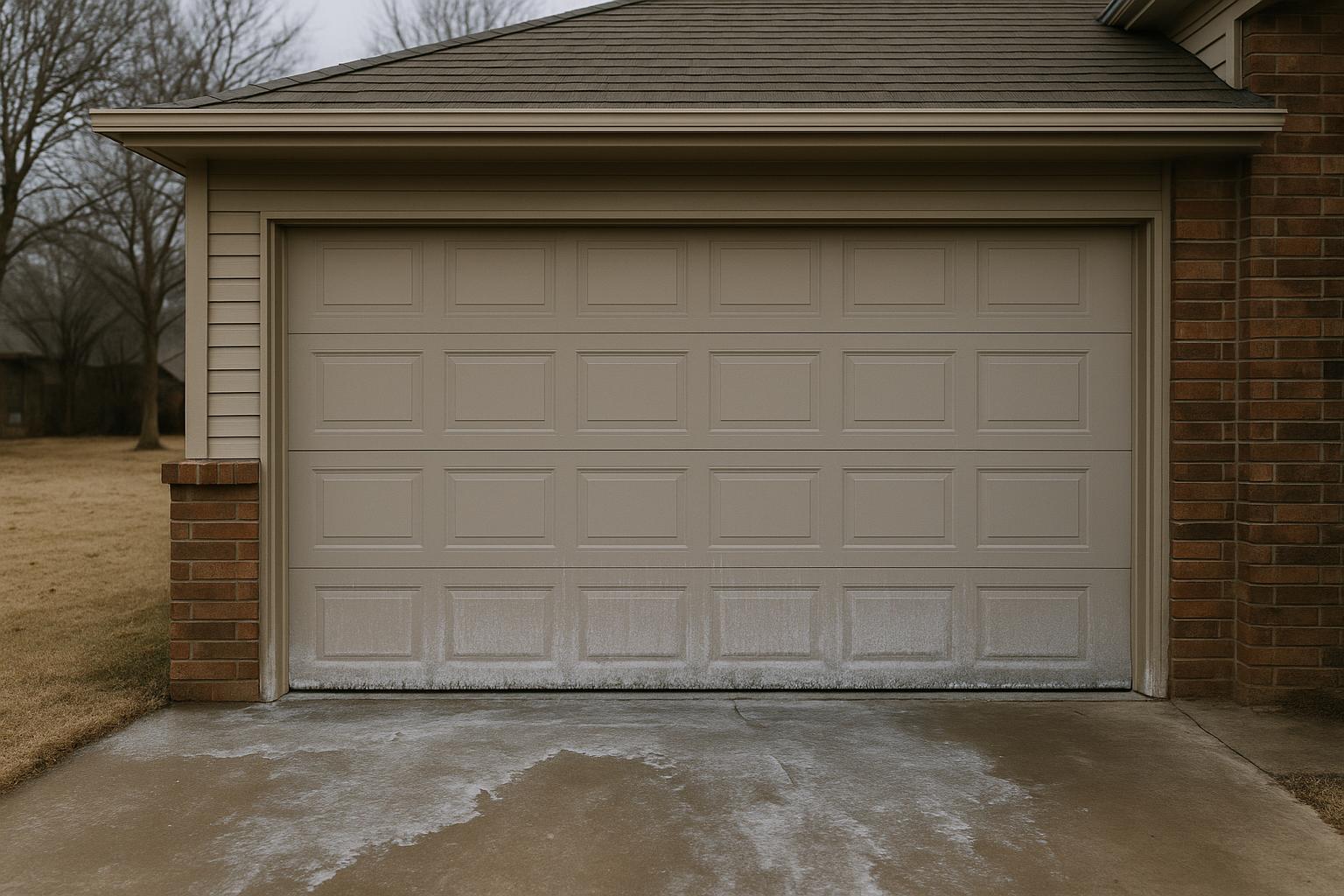
This is the most common cold-weather garage door issue homeowners in Broken Arrow deal with. The rubber weatherstripping along the bottom of your garage door is designed to create a seal that keeps out drafts, rain, and pests. But when temperatures drop below freezing and moisture is present, that seal can literally freeze to your concrete driveway or garage floor.
When you try to open the door, the motor strains against the frozen seal. In some cases, the opener's safety features will prevent it from forcing the door open, which is actually a good thing — forcing it can tear the weatherstripping right off the door or damage the opener itself.
2. Metal Components Contract in the Cold
Your garage door system is made up of dozens of metal parts — springs, tracks, rollers, and hinges. When temperatures plummet, metal contracts slightly. This contraction can cause:
- Tighter fits between rollers and tracks, creating more friction
- Springs losing some tension, making it harder for the opener to lift the door
- Hinges becoming stiff and resistant to movement
These effects are usually subtle, but on an older system that's already showing wear, the added stress of cold weather can be the tipping point.
3. Thickened Lubricant
The lubricant on your garage door's moving parts can thicken or even harden in cold temperatures, especially if a standard grease was used instead of a cold-rated lubricant. When the grease thickens, your rollers, hinges, and springs can't move as freely, putting extra strain on the opener motor.
4. Garage Door Opener Sensitivity
Modern garage door openers have force settings that determine how much resistance the motor will push through before stopping. In cold weather, the increased friction and resistance from contracted metal and thickened lubricant can exceed the opener's force threshold, causing it to stop or reverse as if something is blocking the door.
How to Fix a Frozen Garage Door
If you wake up to a stuck garage door, here's what to do — and what not to do:
Do: Try to Break the Seal Gently
If the weatherstripping is frozen to the ground, try gently tapping along the bottom of the door with a rubber mallet or the heel of your boot. Work your way across the full width of the door. Often, a few light taps are enough to break the ice bond without damaging the seal.
Do: Use Warm Water Carefully
Pouring warm (not boiling) water along the base of the door can melt the ice holding the weatherstripping down. Just be aware that if temperatures stay below freezing, the water may refreeze. If you use this method, try to dry the area afterward or apply a silicone-based lubricant to prevent refreezing.
Don't: Force It with the Opener
Repeatedly pressing the button while the door is frozen shut is a recipe for a burned-out motor, stripped gears, or torn weatherstripping. If the door doesn't open on the first try, stop and investigate before trying again.
Don't: Use a Heat Gun on the Door
While it might seem logical, applying concentrated heat to a garage door panel can warp the material, especially on steel doors. Stick with warm water or gentle manual methods.
Preventing Cold-Weather Garage Door Problems
The best approach is to prepare your garage door system before the cold arrives. Here are some preventive steps that Broken Arrow homeowners can take:
Apply Silicone-Based Lubricant
Before winter sets in, apply a silicone-based spray lubricant to all moving parts — rollers, hinges, springs, and tracks. Silicone-based products resist thickening in cold temperatures far better than standard grease or petroleum-based lubricants.
Treat the Weatherstripping
Apply a thin coat of silicone spray or cooking spray to the bottom weatherstripping. This creates a barrier that prevents the rubber from bonding to wet concrete when it freezes. It's a simple step that takes two minutes and can save you a major headache on a cold morning.
Keep the Area Clear of Water
If water tends to pool near your garage door, address the drainage issue before winter. Even redirecting a downspout or adding a small channel drain can prevent the standing water that leads to frozen weatherstripping.
Schedule a Fall Maintenance Checkup
A professional maintenance visit in late fall can catch worn springs, dried-out lubricant, misaligned tracks, and other issues that become bigger problems once cold weather arrives. Think of it like winterizing your car — a little prevention goes a long way.
When to Call a Professional
Some cold-weather garage door issues are easy to handle yourself. But there are times when calling a professional is the smart move:
- The door still won't open after breaking the ice seal and the motor is straining or making unusual sounds
- A spring has broken. Cold weather accelerates wear on aging springs, and a broken spring is dangerous to handle without proper tools and training
- The opener motor has stopped working after repeated attempts to open a stuck door
- Tracks are visibly misaligned or rollers have come out of the track
- Panels are cracked or warped from ice pressure or forced opening attempts
These situations require the right tools, replacement parts, and experience to resolve safely. Attempting DIY repairs on springs or opener motors can result in serious injury.
Don't Let the Cold Catch You Off Guard
Broken Arrow winters may not be the harshest in the country, but they're cold enough to cause real problems for your garage door if you're not prepared. A little preventive maintenance in the fall can keep your door running smoothly all winter long.
If your garage door is already giving you trouble this season — or if you want to get ahead of the cold with a professional tune-up — Broken Arrow Garage Door Co is here to help. We serve homeowners across Broken Arrow, Tulsa, Bixby, Owasso, Jenks, and Coweta with fast, reliable garage door service you can count on. Give us a call and let's make sure your garage door is ready for whatever winter throws at it.