
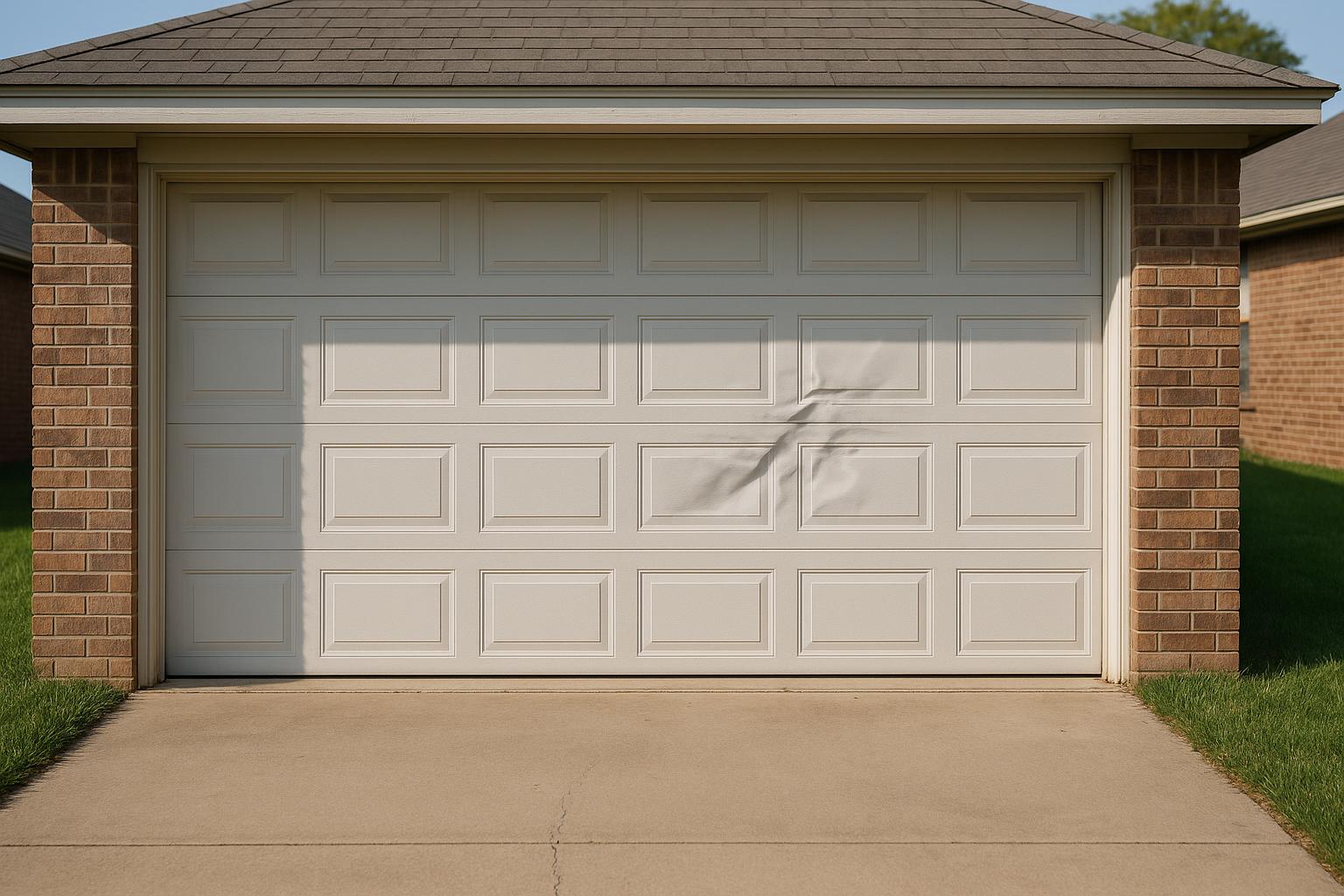
That Dented Panel Is More Than a Cosmetic Problem
Maybe you backed into the garage door. Maybe a stray basketball did the damage. Or maybe years of Oklahoma wind, hail, and sun have left one or two panels looking rough while the rest of the door seems fine. Whatever the cause, you're now staring at a damaged garage door panel and asking yourself the same question every homeowner in Broken Arrow eventually asks: do I replace just the panel, or is it time for a whole new door?
It's a fair question — and the answer isn't always obvious. Replacing a single panel can save you hundreds of dollars, but it's not the right call in every situation. Let's walk through the factors that matter so you can make a confident decision.
When Replacing a Single Panel Makes Sense
Panel replacement is often the most cost-effective solution when the damage is isolated and the rest of your door is in good shape. Here are the situations where a single-panel swap is usually the smart move:
- The damage is limited to one or two panels. A dent, crack, or puncture in a single section doesn't mean the whole door is compromised. If the surrounding panels, tracks, and hardware are all functioning well, replacing just the damaged section can restore your door's appearance and structural integrity.
- Your door model is still in production. Garage door manufacturers regularly update their product lines. If your door is relatively new — say, less than 10 to 15 years old — there's a good chance replacement panels are still available in the same style, color, and material.
- The tracks and hardware are in good condition. Panels don't operate in isolation. If your tracks are straight, your springs are balanced, and your opener runs smoothly, then the rest of the system has plenty of life left. Replacing a single panel lets you get more value out of the existing setup.
- You're working within a tight budget. A single panel replacement typically costs a fraction of a full door installation. If finances are a concern and the damage is cosmetic or minor, a panel swap can buy you several more years.
When It's Time to Replace the Entire Door
Sometimes a panel replacement just doesn't make sense — even if the damage looks minor at first glance. Here's when a full garage door replacement is the better investment:
- Multiple panels are damaged. Once you're replacing two or three panels, the cost starts approaching what you'd pay for a brand-new door. At that point, you're better off getting a fresh door with a full warranty and updated features.
- Your door is old and panels are discontinued. If your garage door is 15 to 20 years old, finding a matching panel can be difficult or impossible. Even if you find one that's close, differences in color fading and weathering can make the replacement panel stand out like a sore thumb.
- The door has structural issues beyond the panels. Bent tracks, worn-out rollers, rusted hinges, or a sagging frame are signs that the entire system is aging out. Putting a new panel on a failing door is like putting new tires on a car with a blown engine.
- You want to improve energy efficiency. Older garage doors — especially uninsulated single-layer steel doors — do a poor job of keeping out Oklahoma's summer heat and winter cold. If you're already spending money on a repair, upgrading to an insulated door can lower your energy bills and make your garage more comfortable year-round.
- You're planning to sell your home. A new garage door consistently ranks as one of the highest-ROI home improvement projects in the country. If you're getting ready to list your Broken Arrow home, a fresh door can boost curb appeal and help you recoup most of the cost at closing.
How to Tell If Your Panel Damage Is Structural
Not all garage door damage is created equal. A small dent in a steel panel might be purely cosmetic, while a crack in a wooden panel could compromise the door's ability to seal and operate safely. Here's how to assess the severity:
Cosmetic Damage
Surface-level dents, minor scratches, and faded paint fall into this category. The door still opens and closes normally, the weatherseal is intact, and the panel isn't bent out of alignment. Cosmetic damage is annoying but not urgent.
Functional Damage
If a panel is bent enough to affect the door's movement — causing it to bind in the tracks, leave gaps at the bottom, or put extra strain on the opener — that's functional damage. It needs to be addressed before it causes secondary problems like broken cables, stripped gears, or a failed opener motor.
Safety Concerns
A cracked or split panel, especially near the hinges, is a safety issue. Garage doors are under significant tension from the spring system, and a weakened panel can fail suddenly. If you notice cracks running along hinge points or the panel flexing when the door moves, stop using the door and call a professional.
What About Mismatched Panels?
One of the biggest concerns homeowners have about single-panel replacement is whether the new panel will match the existing ones. The honest answer: it depends.
If your door is relatively new and the manufacturer still produces the same model, you can usually get an exact match. However, if your door has been exposed to years of Broken Arrow sun and weather, the existing panels may have faded or discolored. A brand-new panel sitting next to weathered ones can look noticeably different.
In some cases, painting the entire door after the panel replacement can solve the mismatch problem. But if the panel style or texture is different, paint won't hide it. This is something we always discuss with homeowners before starting the work — we'd rather give you honest advice upfront than leave you with a result you're not happy with.
The Cost Factor: Panel vs. Full Replacement
Costs vary depending on the door material, style, and size, but here's a general comparison to help you think through the decision:
- Single panel replacement: Typically runs between $200 and $600, including labor and the panel itself. Steel panels are usually on the lower end; wood and custom panels cost more.
- Full garage door replacement: A standard single-car door installation usually starts around $800 to $1,500, while a double-car door ranges from $1,200 to $2,500 or more depending on insulation, material, and style.
When the cost of replacing two or more panels approaches 50% or more of a new door's price, the full replacement almost always makes more financial sense. You get a complete warranty, consistent appearance, and modern features like better insulation and quieter operation.
Let Us Help You Make the Right Call
At Broken Arrow Garage Door Co, we see damaged panels every week — from hail damage after spring storms to accidental impacts and simple wear and tear. We always start with an honest assessment of your door's overall condition before recommending a repair or replacement.
If a panel swap will solve the problem and save you money, that's what we'll recommend. If the smarter long-term move is a new door, we'll explain why and walk you through your options. No pressure, no upselling — just straightforward advice from a local team that wants to earn your trust.
If you've got a damaged garage door panel and you're not sure what to do next, give us a call or schedule a free estimate. We serve homeowners across Broken Arrow, Tulsa, Bixby, Owasso, Jenks, and Coweta, and we're happy to take a look and help you figure out the best path forward.