
Your Garage Door Shouldn't Sound Like That
You press the button on your garage door opener, and instead of the smooth, quiet hum you're used to, you hear grinding, squealing, popping, or rattling. It's easy to ignore at first — the door still opens and closes, so it must be fine, right?
Not necessarily. Strange garage door noises are one of the most common warning signs that something is wearing out, coming loose, or about to fail. For homeowners in Broken Arrow and the surrounding Tulsa metro area, catching these sounds early can save you from an expensive emergency repair — or worse, a safety hazard.
Let's break down the most common garage door noises, what causes them, and what you should do about each one.
Grinding or Scraping Sounds
A grinding or scraping noise when your garage door moves is one of the most concerning sounds you can hear. It usually points to one of these issues:
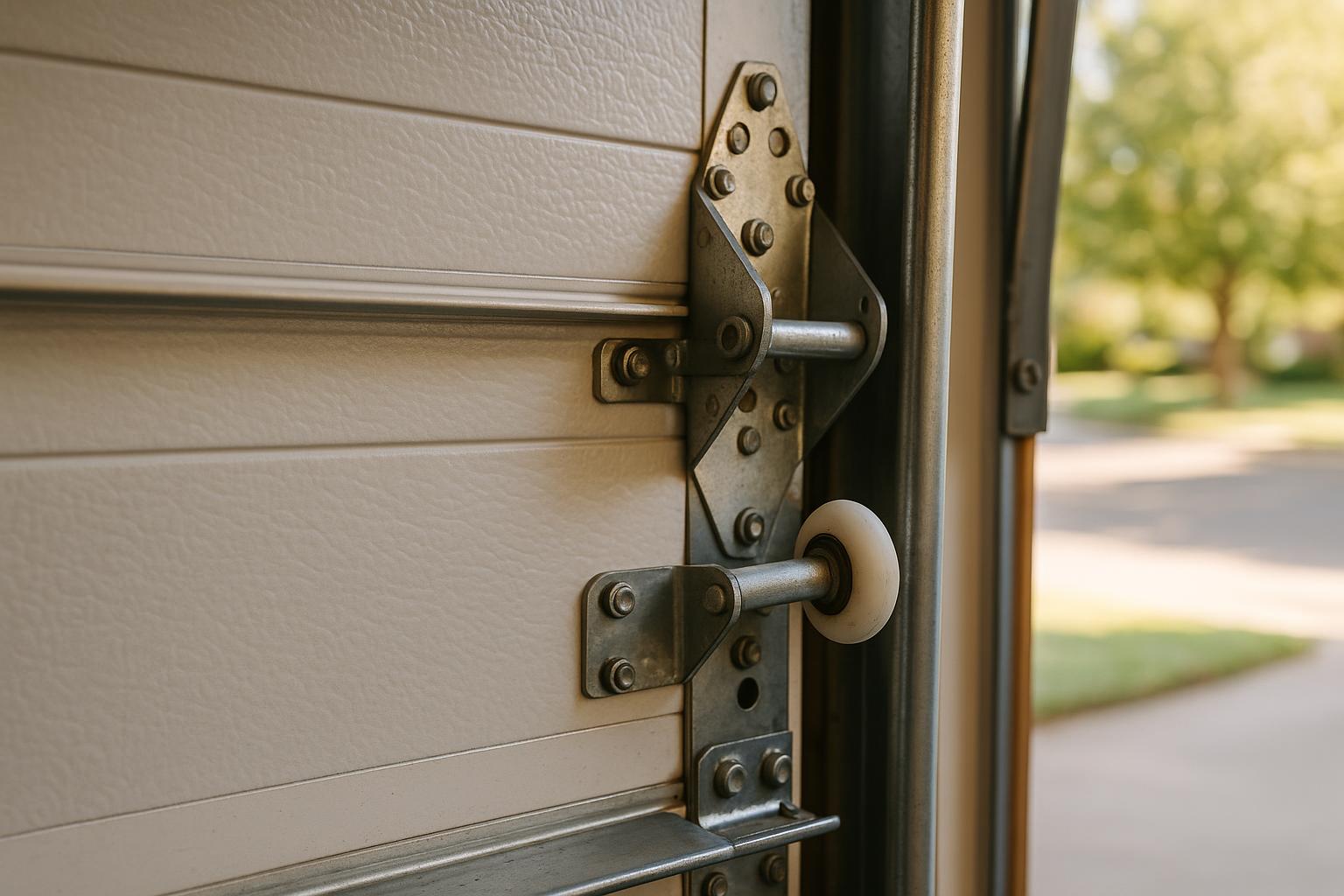
- Worn rollers: Metal rollers wear down over time, and when they do, they grind against the track instead of rolling smoothly. Nylon rollers are a quieter, longer-lasting alternative that we frequently recommend to Broken Arrow homeowners.
- Misaligned tracks: If the vertical or horizontal tracks have shifted even slightly, the door can scrape against them as it moves. This puts stress on the entire system and can cause more serious damage if left unchecked.
- Dry or damaged bearings: The bearings inside your rollers and pulleys need lubrication to function properly. When they dry out, you'll hear a harsh grinding sound with every cycle.
If you hear grinding, stop using the door and have it inspected. Continuing to operate a garage door with misaligned tracks or seized rollers can lead to the door jumping off the track entirely.
Squealing or Screeching Noises
A high-pitched squeal is usually a lubrication problem. Your garage door has many moving parts — springs, hinges, rollers, bearings, and the opener chain or screw drive — and all of them need periodic lubrication to operate quietly.
Here's what to check:
- Hinges: The hinges connecting each panel of your garage door can dry out and start squealing. A quick application of garage door-specific lubricant often solves this.
- Torsion springs: Dry torsion springs can produce a loud squealing or creaking sound, especially in colder months. Oklahoma winters, even the relatively mild ones we get in Broken Arrow, can cause metal components to contract and lose lubrication faster.
- Opener chain: If you have a chain-drive opener, the chain itself may need lubrication or adjustment. A loose chain can also slap against the rail, adding to the noise.
Regular maintenance — ideally twice a year — keeps all of these parts lubricated and functioning quietly. It's one of the simplest ways to extend the life of your garage door system.
Banging or Popping Sounds
A loud bang or pop when the door starts moving or changes direction is startling, and it should be. These sounds often indicate:
- Torsion spring issues: A spring that's under too much or too little tension can pop or bang as the door moves. If a spring actually breaks, it produces a very loud bang — almost like a gunshot — that you'll hear from inside the house.
- Panel problems: Warped or damaged panels can pop as they flex during operation. This is especially common with older wooden garage doors or steel doors that have taken an impact.
- Opener force settings: If the force settings on your garage door opener are set too high, the door can slam into the floor or the stops with a loud bang. Adjusting the down-force limit usually fixes this.
Banging sounds related to springs should always be handled by a professional. Garage door springs are under extreme tension and can cause serious injury if mishandled.
Rattling or Vibrating Sounds
Rattling is the most common garage door noise, and fortunately, it's often the easiest to fix. Common causes include:
- Loose hardware: Nuts, bolts, and screws loosen over time due to the constant vibration of the door cycling up and down. A simple wrench can tighten most of these, but be careful not to overtighten — you can strip the holes or crack the brackets.
- Loose chain or belt: A garage door opener chain or belt that has too much slack will vibrate and rattle during operation.
- Worn support brackets: The brackets that hold the tracks to the wall and ceiling can loosen or wear out, causing the entire track to vibrate when the door moves.
We recommend doing a visual and auditory check of your garage door at least once a month. Stand inside the garage, operate the door, and listen. If something sounds different from last month, it's worth investigating.
When to DIY and When to Call a Professional
Some garage door noise issues are safe for a handy homeowner to address:
- Applying lubricant to hinges, rollers, springs, and tracks
- Tightening loose nuts and bolts on the door panels and brackets
- Clearing debris from the tracks
However, certain repairs should always be left to a trained technician:
- Replacing or adjusting torsion or extension springs
- Realigning tracks
- Replacing rollers, cables, or brackets under tension
- Adjusting opener force and travel limits
Garage doors are the largest moving component in most homes, and they weigh anywhere from 150 to over 400 pounds. Working on one without the right tools and training is genuinely dangerous.
Keep Your Garage Door Running Quietly in Broken Arrow
Strange noises are your garage door's way of asking for help. The sooner you identify and address the source of the sound, the less likely you are to face a major breakdown or safety issue down the road.
At Broken Arrow Garage Door Co, we help homeowners across Broken Arrow, Tulsa, Bixby, Owasso, Jenks, and Coweta keep their garage doors running smoothly and quietly. Whether you need a quick tune-up, a roller replacement, or a full diagnostic inspection, our team shows up on time and gets it done right.
Hearing something that doesn't sound right? Don't wait for it to get worse. Give us a call and let us take a look before a small noise turns into a big problem.