
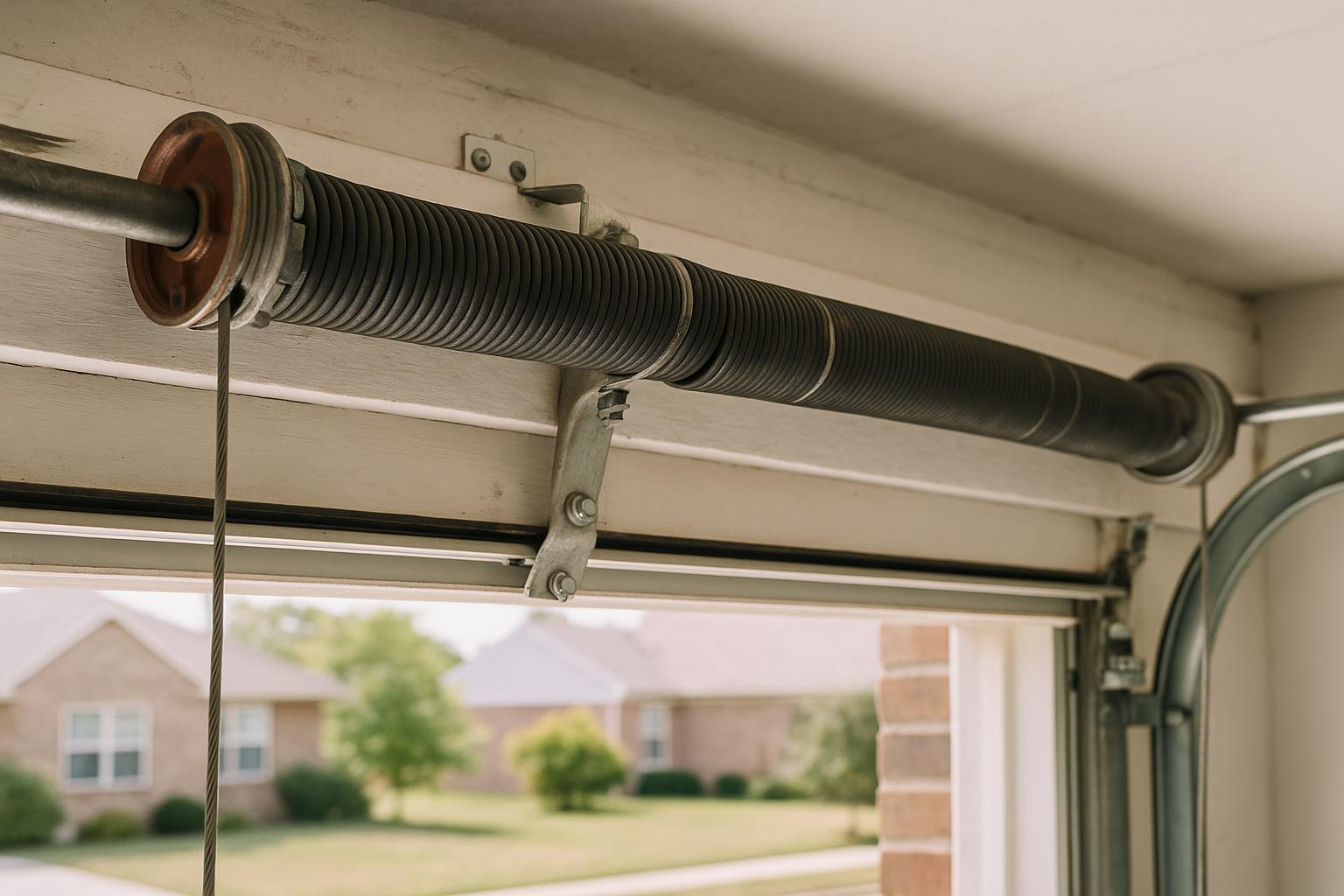
Your Garage Door Springs Are Doing More Work Than You Think
Every time you open or close your garage door, the springs are doing the heavy lifting — literally. A standard two-car garage door can weigh between 150 and 250 pounds, and without properly functioning springs, your opener alone can't handle that load. Springs counterbalance the weight of the door, making it possible to raise and lower it smoothly dozens of times a week.
For homeowners in Broken Arrow who use their garage as a primary entry point — which is most of us — those springs are cycling thousands of times a year. That kind of wear and tear adds up. So how do you know when it's time for a replacement, and how often should you expect to deal with it?
How Long Do Garage Door Springs Typically Last?
The lifespan of a garage door spring is measured in cycles. One cycle equals one full open and one full close. Most standard torsion springs are rated for approximately 10,000 cycles, while high-cycle springs can last 25,000 to 50,000 cycles or more.
Here's what that looks like in real life:
- 10,000-cycle springs: If you open and close your garage door four times a day, these springs will last roughly 7 years.
- 25,000-cycle springs: Under the same usage, you're looking at about 17 years.
- 50,000-cycle springs: These premium springs can last 30 years or more with average use.
Of course, these are estimates. Weather conditions here in the Tulsa metro area — with our hot summers and occasional ice storms — can affect spring longevity. Temperature fluctuations cause the metal to expand and contract repeatedly, which accelerates fatigue over time.
Signs Your Garage Door Springs Are Wearing Out
Springs rarely fail without warning. If you know what to look for, you can catch the problem before you're stuck with a door that won't open on a Monday morning. Here are the most common signs that your springs are nearing the end of their life:
The Door Feels Heavier Than Usual
If you disconnect your opener and try to lift the door manually, it should feel relatively light — almost weightless if the springs are properly balanced. A door that feels heavy or difficult to lift is a clear sign the springs are losing tension.
The Door Opens Unevenly or Crooked
If one spring is weaker than the other, the door may rise unevenly, with one side lagging behind. This puts extra stress on your tracks, rollers, and opener, potentially causing additional damage.
Visible Wear on the Springs
Take a look at your springs from a safe distance. If you notice gaps in the coils, rust, or stretched-out sections, those are signs of significant wear. A spring that has already broken will have a visible gap where it snapped apart.
Loud Bang From the Garage
Many Broken Arrow homeowners first discover a broken spring when they hear a loud bang coming from the garage. That sound is the spring snapping under tension. It can be alarming, but it's actually one of the most common garage door issues we see.
The Opener Struggles or Stops Working
Your garage door opener is designed to work with the springs, not to replace them. If the springs are failing, the opener has to work much harder. You may notice it straining, moving slower, or stopping mid-cycle. Running your opener this way can burn out the motor prematurely.
Can You Replace Garage Door Springs Yourself?
We understand the DIY spirit — it's strong here in Oklahoma. But garage door spring replacement is one job we strongly recommend leaving to professionals. Here's why:
- Extreme tension: Torsion springs are wound under tremendous force. A spring that releases unexpectedly can cause serious injury or even death.
- Specialized tools required: Proper replacement requires winding bars, clamps, and precise calibration tools that most homeowners don't have.
- Incorrect installation risks: If springs aren't matched correctly to your door's weight and size, you'll end up with a door that's unbalanced, which creates safety hazards and shortens the life of every other component.
At Broken Arrow Garage Door Co, we handle spring replacements every week. Our technicians know how to safely remove worn springs, match the correct replacement, and calibrate everything so your door operates smoothly and safely.
Should You Replace Both Springs at the Same Time?
If your garage door has two springs — which most double-car doors in Broken Arrow do — we almost always recommend replacing both at the same time, even if only one has broken. Here's the reasoning:
- Both springs are the same age. If one has failed, the other is likely close behind. Replacing just one means you'll probably be calling for service again within a few months.
- Balanced performance. New springs and old springs have different tension levels. Mismatched springs can cause your door to operate unevenly and put extra wear on your tracks and opener.
- Cost savings. The labor involved in replacing one spring versus two is nearly identical. You save significantly on the service call by doing both at once.
How to Make Your Springs Last Longer
While you can't prevent springs from eventually wearing out, regular maintenance can extend their lifespan and help you avoid unexpected failures:
- Lubricate your springs twice a year. Use a silicone-based or lithium-based spray lubricant on the coils. This reduces friction, prevents rust, and helps the springs operate smoothly. We recommend doing this in the spring and fall.
- Schedule annual maintenance. A professional tune-up includes inspecting springs for wear, checking balance, tightening hardware, and lubricating all moving parts. It's one of the best investments you can make in your garage door system.
- Consider high-cycle springs. If you're replacing springs anyway, ask about upgrading to 25,000 or 50,000-cycle options. The upfront cost is slightly higher, but the long-term value is significant — especially for families in Broken Arrow who use their garage door multiple times daily.
- Keep an eye on balance. Once or twice a year, disconnect your opener and manually lift the door halfway. If it stays in place, your springs are balanced. If it falls or rises on its own, it's time to have them adjusted.
When to Call a Professional
If you're noticing any of the warning signs mentioned above — a heavy door, uneven movement, visible spring damage, or an opener that's struggling — don't wait for a complete failure. A broken spring at the wrong time can leave your car trapped in the garage or, worse, create a safety hazard for your family.
Broken Arrow Garage Door Co serves homeowners throughout Broken Arrow, Tulsa, Bixby, Owasso, Jenks, and Coweta. We carry a wide selection of springs to fit virtually any residential or commercial garage door, and most replacements can be completed in a single visit.
Whether your springs have already snapped or you just want a professional opinion on how much life they have left, give us a call. We'll get your garage door back to working the way it should — safely, quietly, and reliably.